
Most people hear the word monsoon and think of Arizona or New Mexico. But from roughly mid-July through September, Utah gets its own version. And it can do real damage to your roof if you are not paying attention.
I have seen storms roll through the Ogden and Layton areas that do more damage in 20 minutes than an entire winter.
Our monsoon season brings those sudden afternoon and evening thunderstorms that seem to come out of nowhere. One minute it is sunny and 95 degrees, the next minute you have got 60 mile per hour wind gusts, marble sized hail, and torrential rain.
What do monsoon storms actually do to a Utah roof?
Three things, mainly.
Hail damage. Even small hail, around one inch in diameter, can bruise asphalt shingles. It knocks the protective granules loose and creates weak spots that will deteriorate over time. Larger hail can crack shingles, dent flashing, and damage vents and skylights. The tricky part is that hail damage is not always obvious from the ground. You might not see it until a leak shows up months later.
Wind damage. High wind gusts lift shingle edges, break the sealant bond between shingle layers, and can tear shingles right off the roof. Once a shingle lifts, it rarely lays back down properly on its own. That lifted edge becomes an entry point for water. Knowing how to spot wind damage from the ground can save you a headache down the road.
Driving rain. Heavy rain by itself usually is not a problem for a healthy roof. But when you combine it with high wind, water can get pushed sideways and uphill under shingles. Any existing weak point, a lifted shingle, a cracked pipe boot, aging flashing, suddenly becomes a leak during a driving rain event.
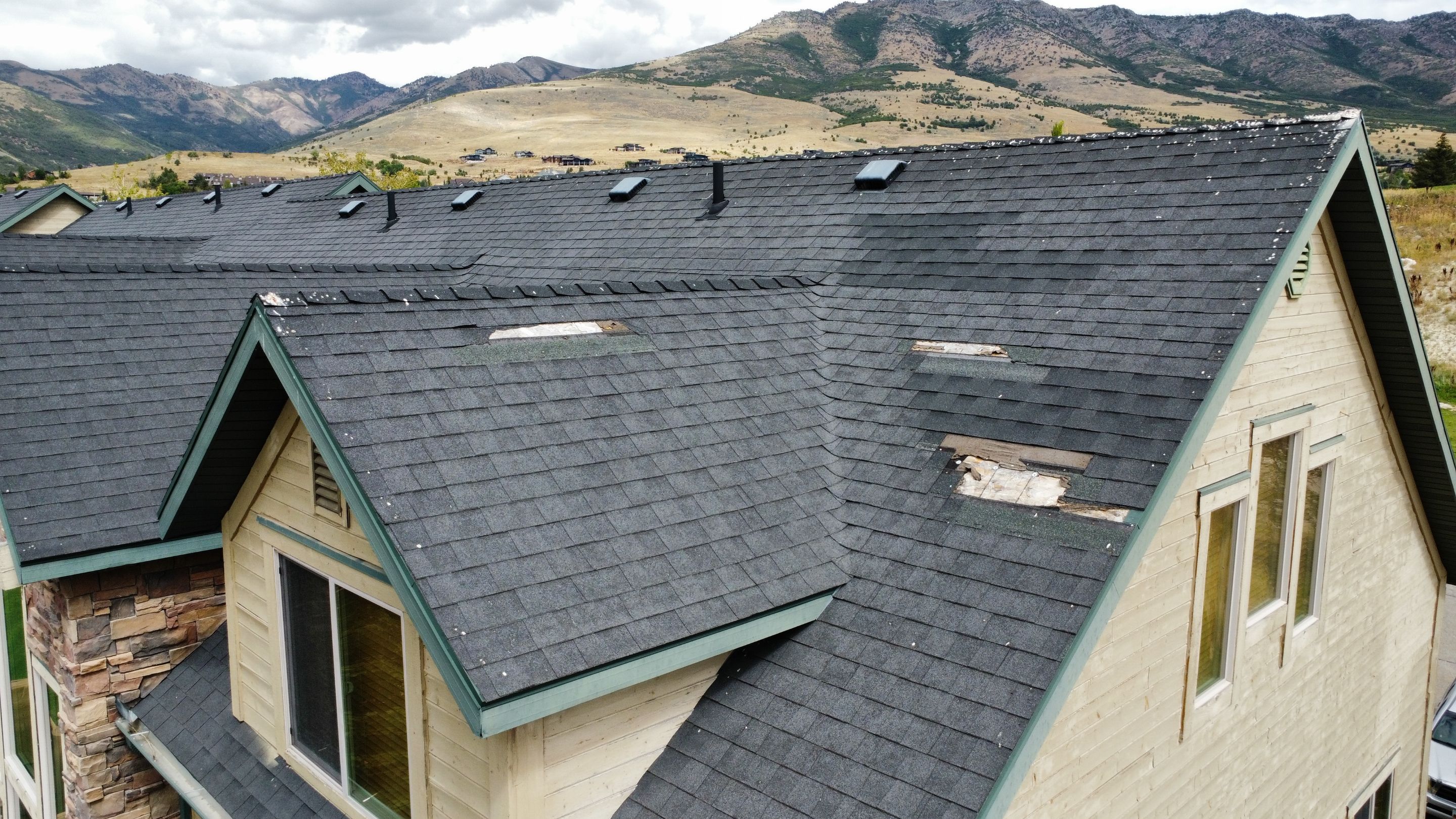
How should you prepare your roof before storm season starts?
The best time to deal with monsoon damage is before it happens. I recommend getting your roof looked at in late spring or early June, before storm season kicks in. A professional inspection will catch any vulnerable spots that winter may have created. Cracked pipe boots, compromised flashing, and shingles that are already lifting are all things we can fix quickly and cheaply before a storm turns them into real problems.
Clean your gutters. I know everyone says this and nobody wants to do it, but clogged gutters during a heavy downpour means water backing up under your roof edge. That is damage you can prevent in 30 minutes with a ladder and a pair of gloves.
Trim back any tree branches that overhang your roof. A healthy branch swaying in the wind is annoying. A dead branch breaking off in a microburst and landing on your roof is expensive.
What should you do after a major storm hits?
If a big storm rolls through and you suspect damage, do not get on the roof yourself. Walk around the property and look for obvious signs: shingle pieces in the yard, dented gutters or downspouts, granules washed into the driveway. Check your attic for any signs of water intrusion.
If you think there is damage, call a roofer you trust for an inspection. Document what you see with photos. And if you think you may have an insurance claim, we can walk you through that process too.
Be cautious about the door knockers. After every major storm, companies from out of state roll into Utah neighborhoods looking for business. A legitimate roofing company is not going to pressure you.
Storm season coming up? Or did a recent storm leave you wondering about damage? Give us a call. We will come take an honest look and tell you exactly what we see. Contact us or schedule online.
"Replacing a roof after a wind storm, although Mother Nature tried to sabotage their efforts on two different occasions, Bob's group prevailed. They took immediate action to remediate the setback. I would not hesitate to recommend Bob Harvey Roofing to anyone needing their services."Dell Butterfield , Google Review