
Every year the first real storm rolls through and my phone starts ringing. Snow piled on the roof. Ice hanging off the eaves. A stain on the ceiling that was not there in October. The question underneath all of it is the same one. Should I be worried?
For most homes along the Wasatch Front, in most winters, no. Your roof was engineered for our snow and it spends four or five months doing exactly what it was built to do. But there is a short list of things worth watching, and a much shorter list of things worth acting on. That is what winter roof care in Utah really comes down to, and you can do almost all of it from the ground.
What a Utah winter actually does to your roof
Winter damage is almost always a water story, not a weight story. Snow lands on the roof and sits. Some of it melts, either from the sun or from heat escaping your attic. The meltwater runs down the slope. Overnight the temperature drops and whatever did not make it off the roof freezes in place. The next afternoon the sun comes out at forty five degrees and the whole cycle runs again.
That cycle is what makes our winters harder on roofs than colder places with steadier weather. A storm drops a foot of snow on Kaysville on Tuesday and by Friday it is sunny and melting. Freeze, thaw, freeze, thaw, for months. Every cycle works at the same weak points: the flashing around a chimney, a tired pipe boot, a nail that backed out, the seam where a dormer meets the main roof. Water gets in where it can, and ice widens the opening a little more each time.
Elevation matters here too. Homes up on the benches in Layton or North Ogden get more snow and hold it a lot longer than homes down on the valley floor. Same storm, very different winter for the roof.
When snow on your roof is fine and when it is not
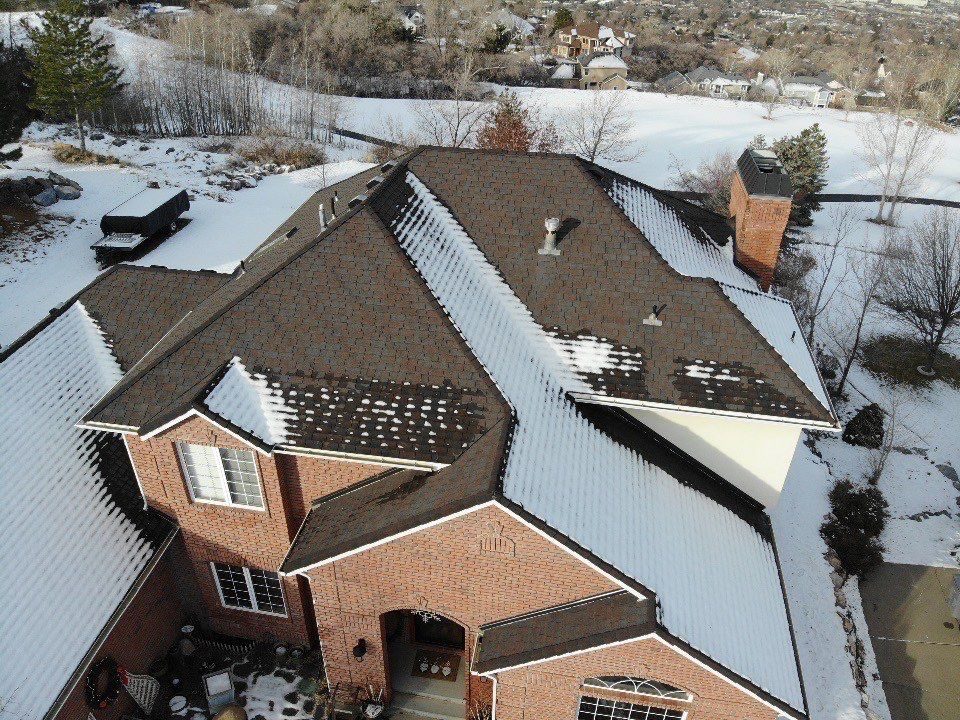
Almost always fine. Residential roofs in Davis and Weber counties are engineered for the ground snow loads our building codes require, and the structure under your shingles is built to carry that weight all season long.
The thing homeowners get wrong is measuring in inches. Depth is not the number that matters. A foot of dry powder is light. A foot of wet, dense snow can weigh several times as much, and old compacted snow that has been through a few melt cycles is heavier still. Three feet of powder can be less load on your roof than a foot of the heavy stuff.
Here is when I do pay attention:
- Storms stacked back to back. Several feet of accumulation with no melting in between is worth keeping an eye on.
- Rain falling on snow. The snowpack soaks it up and gets dramatically heavier in a matter of hours.
- Flat and low slope sections. Snow slides off a steep roof and sits on a flat one. Patio covers, garages, and flat roofed additions carry the most.
- Drifting onto a lower roof. If a two story section sheds onto a one story section, that lower roof can end up with several times the load of the rest of the house.
If a roof is genuinely under structural stress, the house will tell you. Doors and windows that suddenly stick. Loud, repeated cracking from the ceiling or the attic. A visible sag in a ceiling or along the roofline. Those are call somebody today signs, not wait and see signs. If you want the engineering numbers behind all of this, we go through them in our article on snow load.
Why ice dams are the bigger winter threat
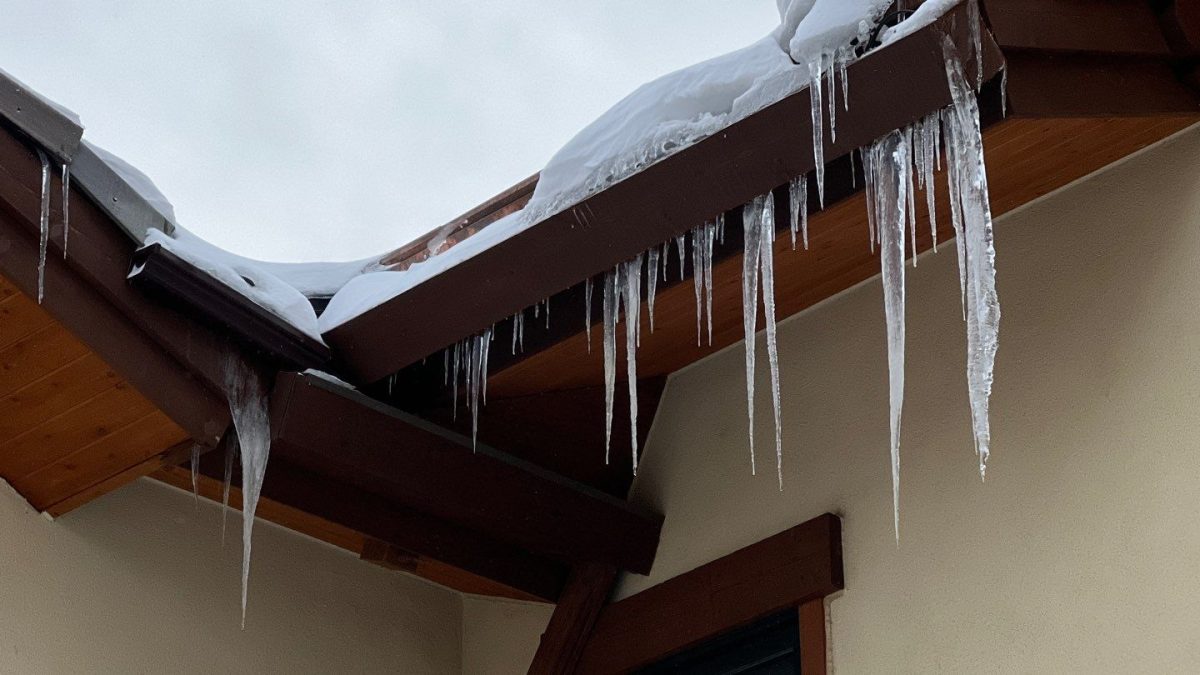
Most of the winter damage I actually get called out for is not weight. It is ice at the edge of the roof.
The mechanism is simple once you see it. Heat leaking out of your living space warms the attic, which warms the roof deck, which melts the snow sitting on top of it. That meltwater runs down the slope until it reaches the eaves, which are cold because they hang out past the heated part of your house. There it refreezes. A ridge of ice builds up, water pools behind it, and that standing water gets pushed up underneath your shingles. Shingles shed water running downhill. They were never designed to hold back a pool of water pushing uphill.
The fix is not on the roof. It is in the attic. Balanced ventilation and adequate insulation keep the roof deck cold, and a cold deck does not melt snow from underneath. Ice and water shield along the eaves is the backstop for the water that gets past anyway, which is why code requires it here. If you are seeing ice build up at your eaves every single winter, that is your house telling you something about the attic. We break the whole thing down in our article on ice dams.
In nearly 40 years along the Wasatch Front, I have seen far more roofs ruined by a few inches of ice at the eaves than by three feet of snow on the slope.
What you can safely do in the middle of winter
Stay off the roof. That is the whole rule, and I mean it more in January than any other month. A snow covered roof is slick, the pitch is hidden under the snow, and setting a ladder on ice is how people end up in the emergency room. There is nothing up there worth that.
A roof rake used from the ground is the one exception. Pulling the snow off the lower three or four feet of the roof takes away the material that feeds an ice dam. You do not need to clear the whole roof, and you should not try. Stand clear of what comes down and keep the rake away from power lines.
Two things to skip. Do not chip at ice with a hammer, a shovel, or a pick, because you will take the shingles and the gutter with it. And be careful with ice melt products on a roof, since standard rock salt is hard on shingles, metal flashing, and the plants underneath.
Your winter walkaround, from the ground
None of this requires a ladder and none of it requires getting on the roof. Do it after a big storm and again during the first warm stretch.
- Look at the eaves for a thick ridge of ice, especially where icicles are hanging in a row. - Compare your south slopes to your north slopes. Snow melting off in odd patches or bare stripes usually means heat is leaking into the attic under those spots. - Walk the yard after a windy storm and look for shingle pieces or piles of granules washed out below the downspouts. - Check your ceilings inside, along with the tops of exterior walls and around skylights, for stains that were not there before. - On a cold morning, open the attic hatch and look for frost on the underside of the decking or insulation that feels damp.
If any of that turns up something, you have a specific thing to describe when you call. That is worth more than a photo of the whole roof.
When it is time to call
Call when you have water inside. A new ceiling stain, a damp spot around a skylight, or a drip during a warm afternoon is not something to monitor through March. Water that reached your drywall has already been in the decking for a while.
Call if you have a heavy ice dam at the eaves, whether or not you see interior water yet. Call if you get any of the structural signs from earlier, meaning sticking doors, repeated cracking, or a sag. And call if a windstorm took shingles off, because an exposed section will not survive the rest of the winter intact.
One thing homeowners assume that is not true: that nothing can be done until spring. We repair roofs in Utah winters. Cold weather affects how shingles seal down and it changes how we schedule the work, but a leak can be found and stopped in February. A full replacement is a different conversation and often does make sense to plan for warmer weather. If your situation can safely wait, I would rather tell you that than sell you something in a snowstorm.
Not sure whether what you are seeing on your roof is normal for a Utah winter? We offer free roof assessments. We will come out, look at what is actually happening on your home, and tell you what we see, including when the honest answer is that it can wait until spring. No pressure, no obligation. Give us a call or schedule online
"The experience with Bob Harvey Roofing was great from start to finish. They were very punctual and did a super job, even going above our expectations. So difficult to get good service sometimes nowadays. It’s very hard to handle when you’re used to doing everything yourself and then you can’t anymore, makes you appreciate the service that much more! Thanks so much Bob and Mike, we’ll definitely tell others about you."Celia Rose , Google Review